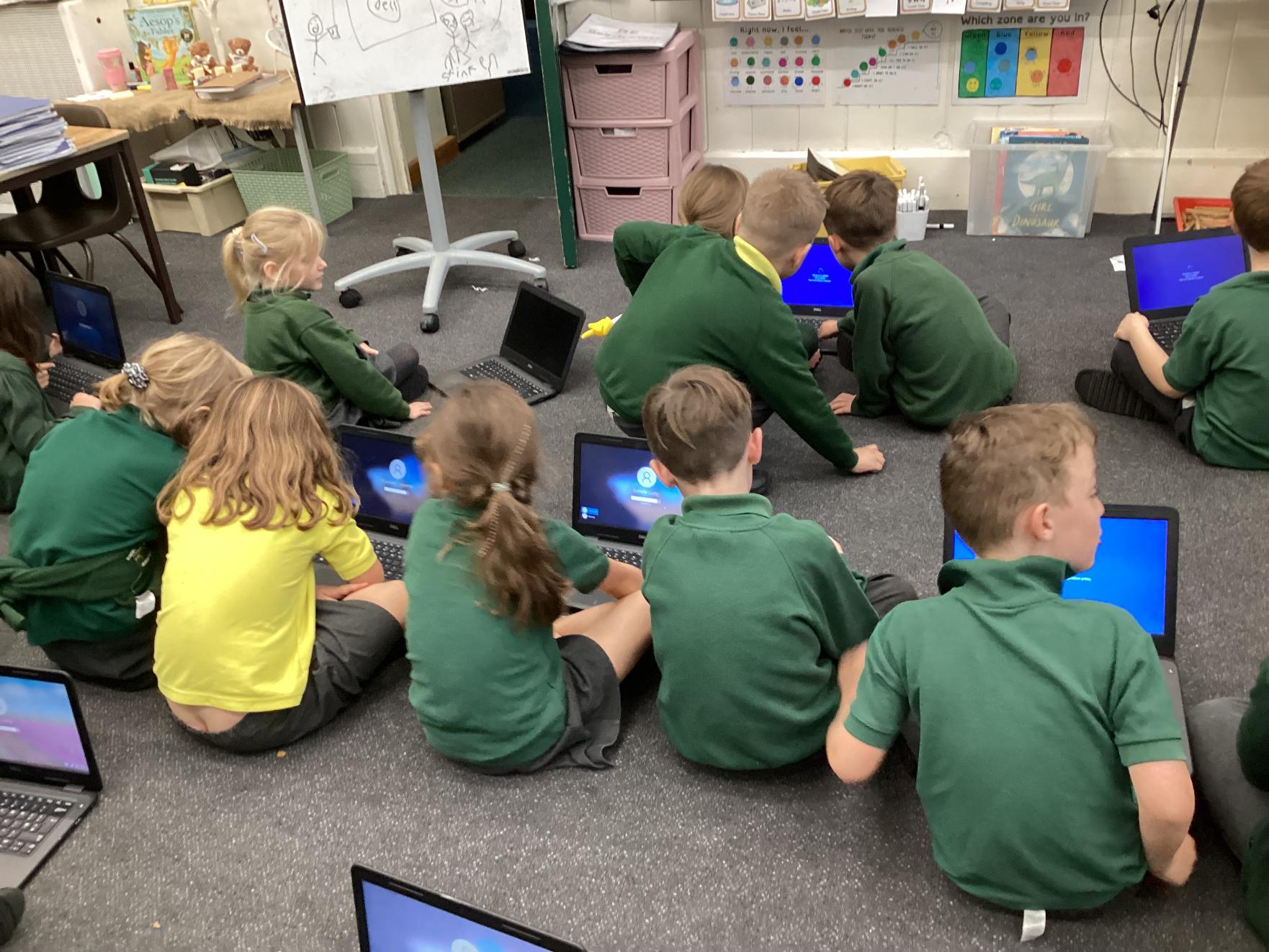
Computing in KS1
Computer Science - During KS1, children learn how to explore and tinker with hardware to find out how it works. They learn how to log on and off computers as well as start understanding what a computer is whilst developing in confidence with the keyboard. Children start to develop computational thinking skills by learning that a problem can be broken down into smaller parts before learning the purpose of algorithms and how to create clear and precise instructions. Children start learning to develop logical thinking in order to explore, predict, test and explain what software can do.
Information technology - Children learn how to use tools to edit images, control data and create basic databases. They also learn how to develop word processing skills so that they can type and reformat text whilst alos being able to collect and input data.
Digital literacy – Children learn how to login, log out and the importance of strong passwords. They learn how to stay safe whilst talking to people on line and what to do if they see or hear something which makes them upset or uncomfortable. Children begin to learn strategies for checking if something they read online is untrue.
Computing systems and networks – Children learn that computers can be used to create and share information more easily than a paper version. They know that computers often work together and that computers only do what people tell them to do.
Data handling – Children learn that sorting objects into categories can help you locate information as well as learning how to create different data representations on a computer. They understand that tools such as spreadsheets are important for capturing simple data.
Online Safety – Children understand the difference between online and offline whilst also learning that is safe to post online. They are able to express when they have concerns about the internet and how to ask for permission before sharing something about others online. They learn the right to say ‘no’ to their data being shared.